The Architecture of Storage in Modern Workspaces
June 7, 2026
KnowledgeWorkplaces are changing. Open-plan offices, collaborative areas and flexible layouts are replacing traditional workspace structures.
In this evolving environment, storage is no longer simply a functional element. It has become part of the way modern offices are organized and experienced.
Today’s storage systems play a role in structuring space, improving organization and supporting the overall design of the workplace.
More Than Storage
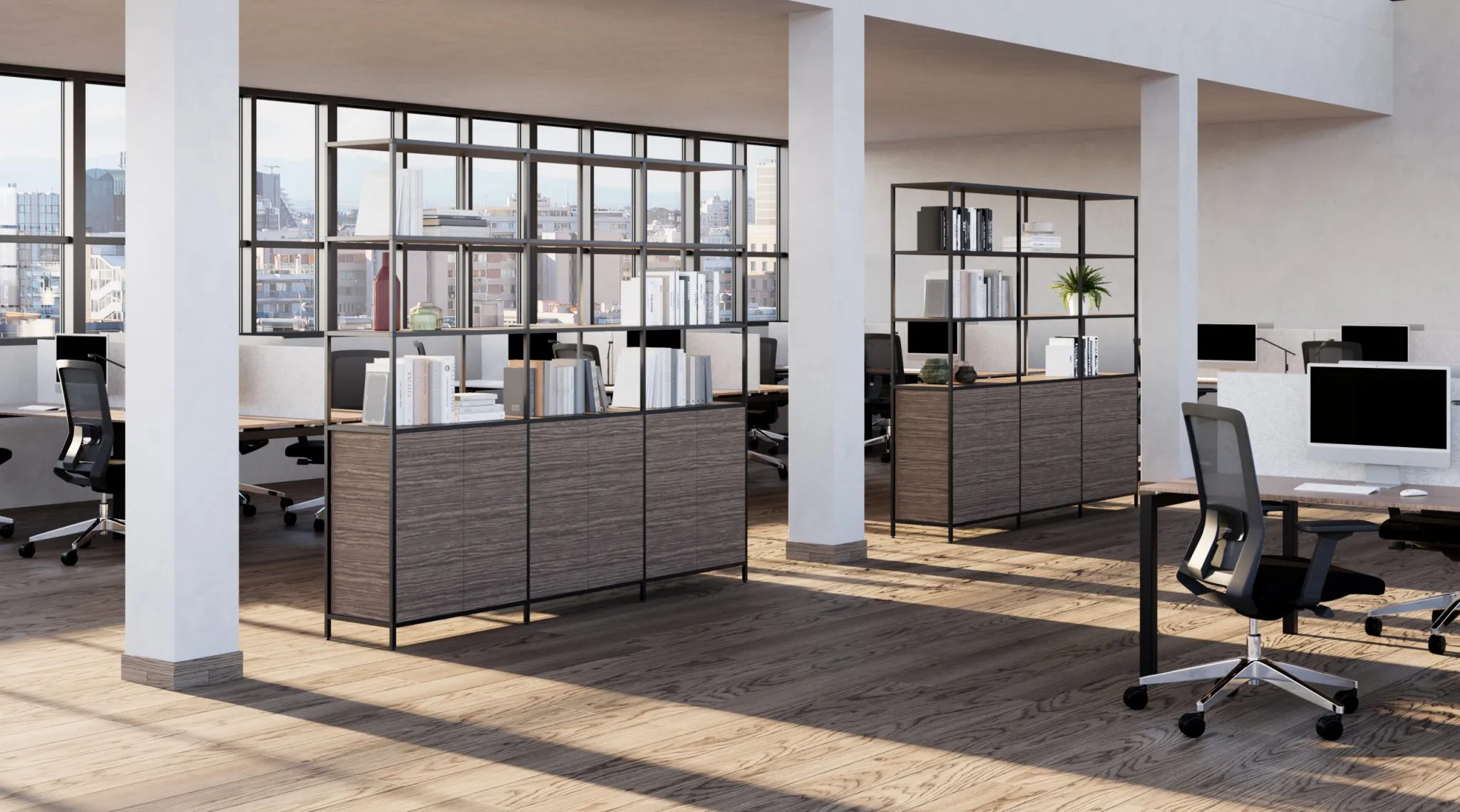
In contemporary office design, storage systems increasingly act as spatial tools. They help organize open environments, define different areas within the workspace and maintain visual clarity without interrupting openness.
Rather than being separate furniture pieces, storage becomes part of the architecture of the office.
Supporting Flexible Workspaces
Modern workplaces are dynamic. Teams evolve, layouts change and companies continuously adapt their work environments.
Modular storage systems help support this flexibility by allowing offices to reorganize space easily without major structural changes.
Design That Structures the Workspace
Well-designed storage contributes not only to organization but also to the visual balance of the workspace. Clean structures and modular systems help create environments that feel both open and well organized.
In this sense, storage becomes a tool for shaping the workplace itself.
At Titan Office Solutions, this philosophy is reflected in systems such as the Cubic Storage System, where modular flexibility and clean design support the needs of contemporary work environments.
Because in modern offices, storage is no longer just about keeping things organized — it helps structure the workspace itself.